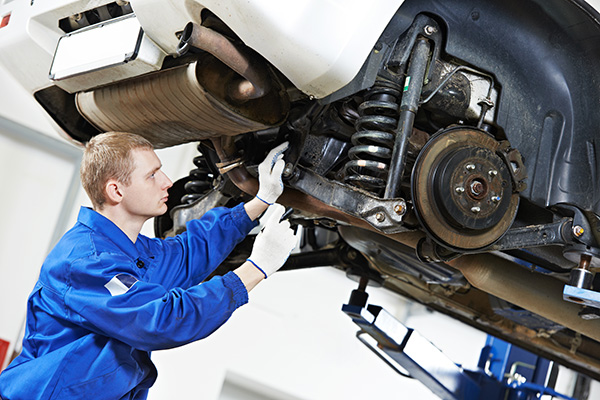
Suspension wear usually creeps in slowly, so it can be hard to notice until the ride feels off all the time. A worn suspension can make the car bounce, wander, clunk over bumps, or chew through tires faster than it should.
The good news is you can spot a lot of the clues without being a suspension expert. You just need to know what changes are meaningful and what to look at first.
How Suspension Wear Builds Up
Your suspension is a mix of parts that control movement and keep the tires planted. Shocks or struts manage bouncing, while joints and bushings keep everything tight and aligned. Over time, rubber dries out, fluid-filled mounts weaken, and metal joints develop play. Once that happens, one worn part can make other parts work harder and wear faster.
A common pattern is this: the car still feels fine on smooth roads, but rough pavement exposes the problem. You start noticing extra movement, more noise, and less confidence in quick steering inputs. That is usually when it is time to stop hoping it goes away and start checking the basics.
Ride Changes You Feel On Everyday Drives
A worn suspension often shows up as bouncing after dips, speed bumps, or rough patches of road. Instead of settling quickly, the car may keep moving up and down like it cannot calm itself. Some drivers describe it as floaty on the highway, especially when the road has gentle waves. That feeling is often linked to tired shocks or struts.
You might also notice the vehicle leans more in turns or feels top-heavy in curves that used to feel normal. If the car feels like it takes a moment to settle after a lane change, that can be another clue. In our shop, we see this most when the dampers are past their prime and the rest of the suspension has started compensating.
Noises That Point To Worn Parts
Clunks, rattles, and knocks over bumps usually mean something underneath is loose or shifting. Sway bar links, control arm bushings, and ball joints are common sources because they take repeated impact. A sharp clunk on a pothole can come from a joint that has play, while a lighter rattle can come from hardware that is no longer tight or bushings that have softened.
Pay attention to when the sound happens. If it clunks when you brake and hit a bump at the same time, that can point toward worn control arm bushings. If it clicks during turns or feels like it is coming from one corner consistently, that helps narrow the search.
Tire Clues That Are Easy To Miss
Tires tell the truth about what the suspension is doing. If you see cupping or scalloped patches around the tread, the tire may be bouncing as it rolls, which is common with worn shocks or struts. If the inside edge is worn down more than the rest, alignment angles may be drifting because bushings or joints are no longer holding position. Those wear patterns usually do not fix themselves, even if you rotate the tires.
A quick suspension inspection during a tire rotation can catch this early. It is also a smart time to look for torn boots, leaking struts, and uneven ride height from side to side. Catching the cause before you buy new tires can save you from ruining the next set the same way.
Steering And Braking Signs Drivers Notice Late
Loose or wandering steering is a big clue that something is worn in the front end. If you are constantly making small corrections to stay straight, that can point to play in tie rods, ball joints, or control arm bushings. Some vehicles also develop a mild shimmy or shake that feels worse on rough highways, even when the tires are balanced. That kind of instability is often suspension-related rather than just tire-related.
Braking can also feel different. If the front end dives hard on moderate braking, the front dampers may be weak. If the car feels unsettled during braking on uneven pavement, worn components can allow the wheels to move in ways they should not. Our technicians look closely at these symptoms because they affect how predictable the car feels in a quick stop.
Quick Checks You Can Do Before You Book
Start with a simple walk-around on level ground. Look at the ride height and see if one corner sits lower than the others. Then check each tire for odd wear and run your hand lightly across the tread to feel for a choppy pattern. That kind of basic check is part of regular maintenance and it often spots problems before they get expensive.
Next, listen during a short drive with the radio off. Try a few gentle turns and a few moderate bumps at low speed to see if the noise repeats consistently. If you notice clunks, extra bouncing, or steering that feels vague, booking service sooner is the safer move than waiting for it to get worse.
Get Suspension Repair In Las Vegas and Henderson With Asian Imports
If you’re dealing with bouncing, clunks, uneven tire wear, or loose steering feel, the next step is to book suspension service so worn parts can be replaced before they take out tires or compromise control.
Schedule service with Asian Imports in Las Vegas and Henderson when you want the suspension tightened up, the ride stabilized, and the vehicle safe and predictable again.