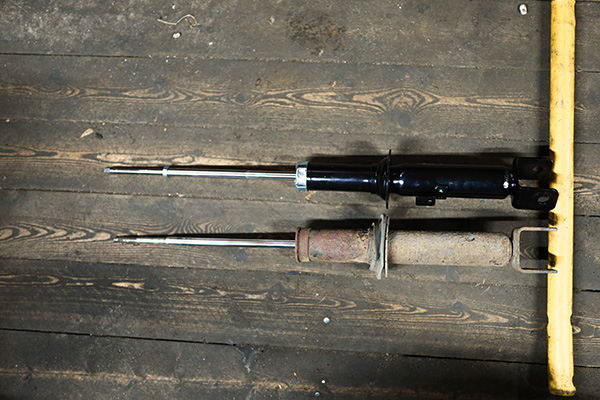
Your vehicle's suspension system lives a completely thankless life. Every single time you back out of your driveway, cruise down the highway, or take a sharp turn, a complex network of springs, links, and dampers is working at lightning speed to keep your ride smooth. They take the absolute brunt of every single pothole, speed bump, and rough patch of asphalt you encounter. Because all of this heavy lifting happens underneath the car, it is incredibly easy to take your suspension for granted until something goes wrong.
One of the most common suspension issues we diagnose at our shop is a leaking strut. You might notice it during a routine oil change, or you might spot a mysterious, oily smudge coating the components right behind your front wheel. When fluid starts escaping from a strut, it is a clear cry for help from your suspension. Today, we want to look at exactly what causes a suspension strut to leak, why it happens, and whether driving with a leaking strut poses a genuine danger to you and your family.
What Is a Strut and Why Does It Have Fluid?
To understand a leak, we first need to look at what a strut actually does. A lot of drivers use the terms shock and strut interchangeably, but they are slightly different. While a standard shock absorber simply dampens bounces, a strut is a structural powerhouse. It combines the shock absorber mechanism with a heavy coil spring into one complete assembly, acting as a major structural pillar that holds up the physical weight of your vehicle's chassis.
Inside the core of that strut is a piston that moves up and down inside a chamber filled with specialized hydraulic fluid and pressurized gas.
When your tire hits a bump, the coil spring absorbs the massive initial impact. But springs love to bounce. Without an intervention, your car would keep oscillating up and down like a pogo stick for blocks. The hydraulic fluid inside the strut forces the moving piston to fight against heavy fluid resistance. This action converts the kinetic energy of the bounce into heat, smoothing out the motion instantly so your tires stay glued to the road.
The Common Culprits Behind a Strut Leak
Struts are incredibly tough components designed to last for tens of thousands of miles, but they are not indestructible. When a strut begins to leak, it almost always comes down to a failure of the internal rubber seals. Here is what typically causes that damage:
Road Debris and Dust: The polished metal shaft of the strut piston slides in and out of the fluid chamber millions of times over its lifespan. If the protective rubber dust boot rips or rots away, road grime, salt, and sand can coat the polished shaft. As the shaft moves, that grit acts like sandpaper, tearing the delicate internal rubber seals and allowing the hydraulic fluid to escape.
Brutal Pothole Impacts: Hitting a deep pothole, smashing into a curb, or driving over a speed bump at high speeds creates a massive spike in internal hydraulic pressure. This sudden force can physically blow out the rubber seals or slightly bend the internal piston shaft, creating an instant pathway for a leak.
Simple Old Age: Like any rubber component exposed to extreme heat, freezing winter temperatures, and constant movement, the internal seals will eventually dry out, crack, and fail naturally as your odometer climbs past the 70,000-mile mark.
Is Driving with a Leaking Strut Dangerous?
The short answer is yes, it absolutely is. While a minor, light film of oil on a strut is a sign that the component is starting to wear out, a noticeable leak where fluid is actively dripping down the side of the housing is a safety priority.
When the hydraulic fluid escapes, the strut loses its dampening ability. Your car shifts from being a precisely controlled machine to an unpredictable bouncing hazard.
First, your stopping distance will increase dramatically. When you slam on your brakes in an emergency, the weight of your vehicle naturally lunges forward. Healthy front struts hold the nose of the car up, keeping the rear tires firmly planted. If your front struts are empty of fluid, the vehicle will dive violently forward. This weight transfer lifts the rear tires away from the pavement, reducing your traction and adding critical feet to the distance it takes to stop safely.
Second, a leaking strut severely compromises your stability and steering control. If you hit a bump while traveling around a fast highway curve, an un-damped wheel will bounce repeatedly, breaking contact with the road. You can easily lose control of the steering, or your anti-lock braking and electronic stability control systems can become confused by the bouncing wheel, leading to a dangerous skid.
Finally, ignoring a leaking strut creates a financial domino effect. The constant, uncontrolled bouncing will quickly chop and cup your tire tread, ruining an expensive set of tires in a matter of weeks. It also transfers the un-damped road vibrations straight into your ball joints, tie rods, and wheel bearings, wearing them out prematurely.
Let Us Restore Your Ride Comfort and Safety
Spotted a mysterious oily smudge on your suspension or noticing a rough, bouncy ride lately? Do not compromise your safety on the road. Stop by Asian Imports in Las Vegas or Henderson, NV or book your comprehensive suspension inspection online today, and let our friendly team get your vehicle riding smooth and safe again!