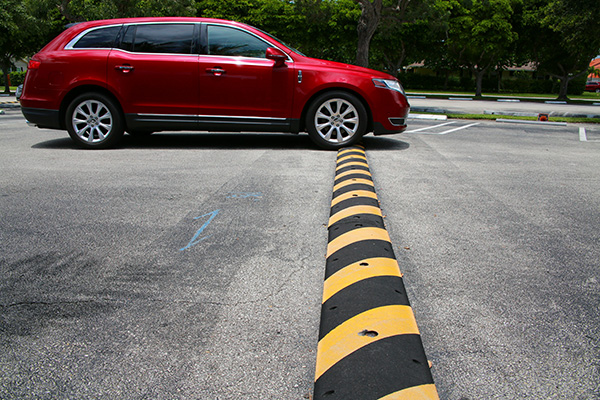
A clunk over a speed bump is easy to notice. A clunk over tiny cracks, patched pavement, or a rough parking lot is more puzzling. The suspension hardly seems to be moving, yet something underneath the car sounds loose.
Small, quick bumps are actually good at exposing certain kinds of wear. They make suspension and steering parts move back and forth rapidly without much body movement. A worn sway bar link, loose strut mount, tired bushing, or brake component can knock repeatedly on roads where the car feels almost normal everywhere else.
Sway Bar Links Are High on the List
Sway bar links connect the sway bar to the suspension and help control body roll through turns. The joints at each end are relatively small, and once they develop play, they can knock as the wheels move independently over broken pavement.
The noise is often quick and repetitive rather than one heavy bang. A road with shallow potholes or uneven concrete can make it much easier to reproduce than a large speed bump. On a lift, a link may even look acceptable until it is moved or loaded in the same direction it sees on the road.
Control Arm Bushings Can Let the Suspension Shift
Control arm bushings should allow controlled movement while keeping the wheel where it belongs. As the rubber cracks, softens, or separates from its sleeve, the control arm can move farther than intended.
That movement can produce a dull clunk when the tire hits an edge in the pavement, during braking, or when you change from acceleration to coasting. We also look for steering changes and uneven tire wear. A worn bushing doesn't always make the car feel loose right away, but once it lets the wheel shift under load, alignment readings taken with the car sitting still only tell part of the story.
Strut Mounts Can Knock Above the Wheel
The upper strut mount connects the strut assembly to the body. Depending on the suspension design, it may also contain a bearing that lets the strut rotate as you steer. Rubber in the mount can crack or collapse, and the bearing can develop looseness.
A worn mount can make a knock that seems to come from high inside the wheel well. You might hear it over small bumps, while entering a driveway at an angle, or when turning the steering wheel at low speed. If the mount is binding rather than loose, the symptom can sound more like a pop or creak.
Loose Brake Hardware Can Sound Like Suspension Trouble
Not every clunk over rough pavement starts with the suspension. Brake pads sit inside brackets with clips and hardware designed to keep them positioned correctly. If a clip is missing, worn, or installed incorrectly, a pad can shift when the wheel hits a bump.
One clue is whether the noise changes when you lightly press the brake pedal while driving over the same rough section. If the clunk becomes quieter with the brakes applied, brake hardware moves higher on our list. That does not prove the diagnosis, but it gives the inspection a useful direction instead of replacing suspension parts based only on where the sound seems to come from.
Ball Joints and Tie Rods Need to Be Taken Seriously
Ball joints and tie rods help hold the wheel in position and connect it to the steering system. A small amount of looseness can produce a knock over broken pavement before the steering begins to feel obviously bad.
During an inspection, we are looking for actual play, not just torn rubber boots. A damaged boot can let grease out and contamination in, but looseness in the joint is what changes the repair decision. If the car also wanders, needs frequent steering corrections, or is wearing a tire unevenly, these steering and suspension joints deserve prompt attention.
How the Sound Behaves Helps Narrow It Down
Where and when the clunk happens can save a lot of time. A fast rattle over repeated small bumps often points us toward links, mounts, or hardware. A heavier single knock as the vehicle changes direction can suggest a bushing or joint moving under load.
Details worth remembering before the appointment include:
- Whether the noise comes from the front or rear
- If it is louder on one side
- Whether braking changes the sound
- If turning the steering wheel makes it appear
- Whether it happens only when the car is cold
- If passengers or cargo make it worse
We often road-test the vehicle on the type of pavement that produces the complaint. A noise that never happens on a smooth shop driveway can become obvious within a block on the right road.
Do Not Ignore a Clunk Just Because the Car Still Drives Fine
Some noisy parts, such as sway bar links, may start as an annoyance rather than an immediate handling problem. Other sources, including loose ball joints or tie rods, have a much bigger effect on wheel control. The sound alone does not tell you which one you have.
Regular maintenance can catch cracked bushings, worn joints, and loose hardware before the noise becomes constant. Once a new clunk appears, though, checking the suspension while the symptom is still easy to reproduce is better than waiting for steering or tire wear to change too.
Get Suspension Diagnostics In Nevada, With Asian Imports
If your car clunks over small bumps or uneven roads, Asian Imports can inspect the steering, suspension, brake hardware, and mounting points at its Las Vegas and Henderson, NV, locations to find what is moving.
Contact us to schedule a suspension inspection and have us trace the noise before replacing parts that may not be causing it.